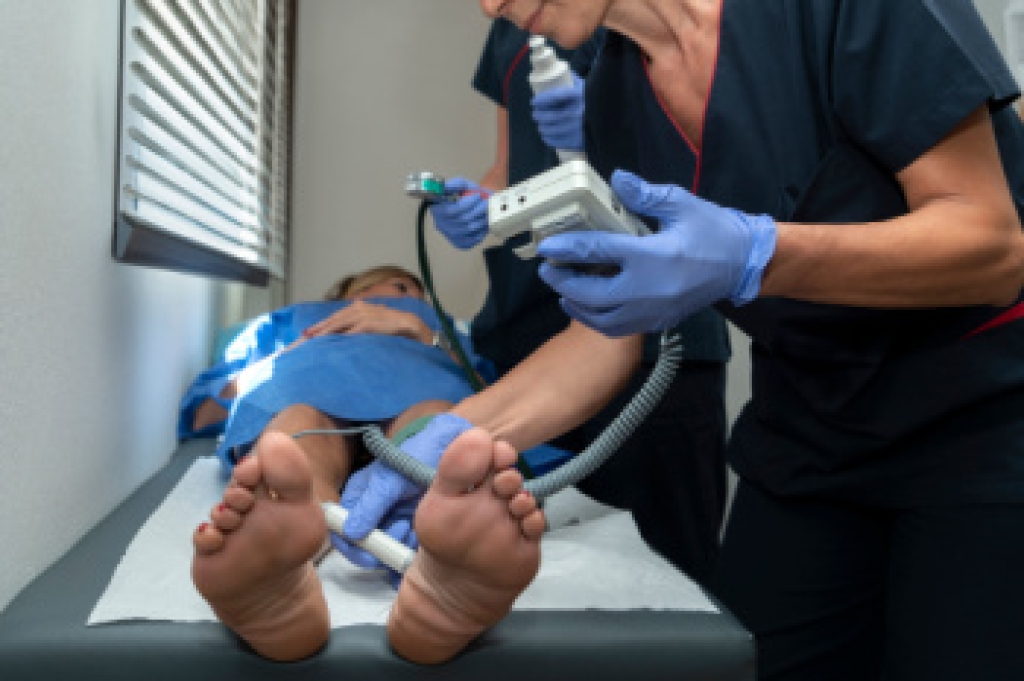
Vascular testing of the lower limbs helps evaluate how well blood moves through the arteries and veins of the legs and feet. These assessments are often recommended when patients experience symptoms such as leg cramping, slow healing wounds, skin discoloration, numbness, or pain while walking. Poor circulation can affect tissue health and increase the risk of serious complications, particularly in individuals with diabetes or other chronic medical conditions. A podiatrist may use non-invasive testing to measure circulation, compare blood pressure in different areas of the limbs, or assess how effectively blood reaches the feet. In some cases, additional imaging may be recommended for a closer look at the blood vessels. Identifying circulation problems early can help guide treatment decisions and improve healing outcomes. These evaluations are especially important when wounds are not improving as expected, or symptoms suggest reduced blood supply. If you notice signs of poor circulation in your legs or feet, it is suggested that you visit a podiatrist for an evaluation and appropriate treatment.
Vascular testing plays an important part in diagnosing disease like peripheral artery disease. If you have symptoms of peripheral artery disease, or diabetes, consult with Dr. Howard Horowitz from Bowie Foot & Ankle . Our doctor will assess your condition and provide you with quality foot and ankle treatment.
What Is Vascular Testing?
Vascular testing checks for how well blood circulation is in the veins and arteries. This is most often done to determine and treat a patient for peripheral artery disease (PAD), stroke, and aneurysms. Podiatrists utilize vascular testing when a patient has symptoms of PAD or if they believe they might. If a patient has diabetes, a podiatrist may determine a vascular test to be prudent to check for poor blood circulation.
How Is it Conducted?
Most forms of vascular testing are non-invasive. Podiatrists will first conduct a visual inspection for any wounds, discoloration, and any abnormal signs prior to a vascular test.
The most common tests include:
- Ankle-Brachial Index (ABI) examination
- Doppler examination
- Pedal pulses
These tests are safe, painless, and easy to do. Once finished, the podiatrist can then provide a diagnosis and the best course for treatment.
If you have any questions please contact our office located in Bowie, MD . We offer the newest diagnostic and treatment technologies for all your foot and ankle needs.
