
If you are suffering from tenderness, pain, or stiffness in the joints of your feet or ankles, call us to schedule an appointment.
If you are suffering from tenderness, pain, or stiffness in the joints of your feet or ankles, call us to schedule an appointment.
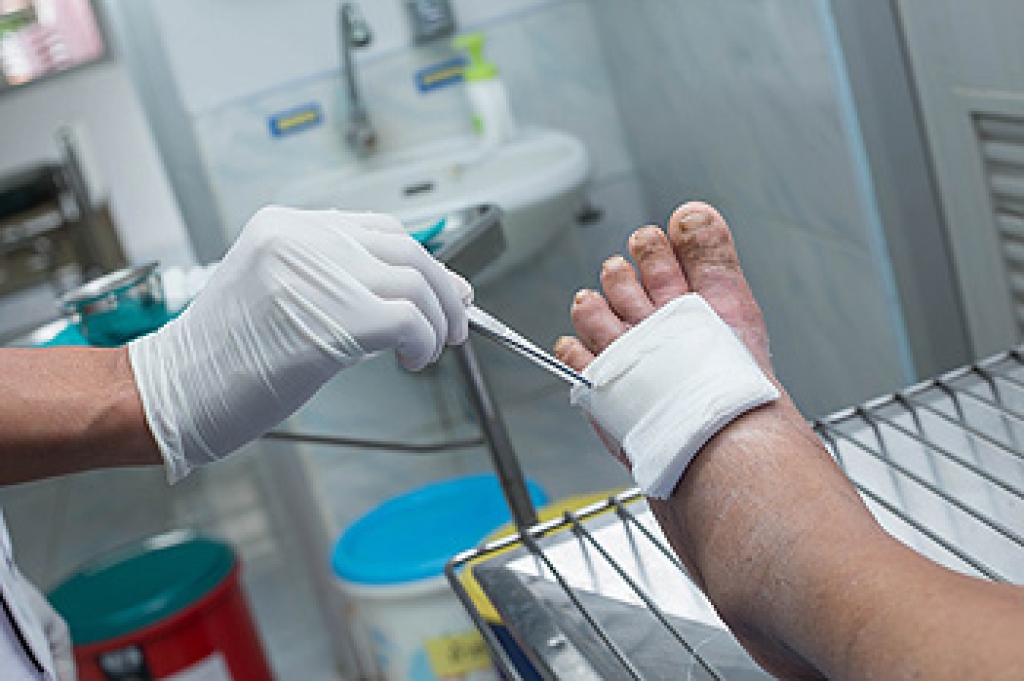
A non-diabetes-related foot ulcer is an open sore on the foot that develops from factors other than diabetes. These ulcers often form due to poor circulation, pressure, trauma, or underlying skin conditions. Common causes include arterial disease, venous insufficiency, friction from footwear, and repetitive stress. Types of non diabetes related ulcers may include arterial ulcers, venous ulcers, and pressure ulcers, each affecting the foot in different ways. Symptoms can include slow healing wounds, drainage, redness, pain, or skin breakdown. A podiatrist can identify the type and cause of the ulcer, provide proper wound care, improve pressure distribution, and help prevent infection or further tissue damage. If you notice a sore on your foot that does not heal or worsens over time, it is strongly suggested that you schedule an appointment with a podiatrist for an evaluation and expert care.
Wound care is an important part in dealing with diabetes. If you have diabetes and a foot wound or would like more information about wound care for diabetics, consult with Dr. Howard Horowitz from Bowie Foot & Ankle . Our doctor will assess your condition and provide you with quality foot and ankle treatment.
What Is Wound Care?
Wound care is the practice of taking proper care of a wound. This can range from the smallest to the largest of wounds. While everyone can benefit from proper wound care, it is much more important for diabetics. Diabetics often suffer from poor blood circulation which causes wounds to heal much slower than they would in a non-diabetic.
What Is the Importance of Wound Care?
While it may not seem apparent with small ulcers on the foot, for diabetics, any size ulcer can become infected. Diabetics often also suffer from neuropathy, or nerve loss. This means they might not even feel when they have an ulcer on their foot. If the wound becomes severely infected, amputation may be necessary. Therefore, it is of the upmost importance to properly care for any and all foot wounds.
How to Care for Wounds
The best way to care for foot wounds is to prevent them. For diabetics, this means daily inspections of the feet for any signs of abnormalities or ulcers. It is also recommended to see a podiatrist several times a year for a foot inspection. If you do have an ulcer, run the wound under water to clear dirt from the wound; then apply antibiotic ointment to the wound and cover with a bandage. Bandages should be changed daily and keeping pressure off the wound is smart. It is advised to see a podiatrist, who can keep an eye on it.
If you have any questions please contact our office located in Bowie, MD . We offer the newest diagnostic and treatment technologies for all your foot and ankle needs.

Foot exercises support strength, flexibility, and coordination in the feet, toes, and ankles after pain or injury. Controlled movement encourages circulation, helps tissues recover, and improves joint motion needed for walking and balance. Gentle strengthening of the toes and arch muscles can improve stability at the ankle and reduce stress on joints during daily activity. Stretching motions can improve range of motion and support smoother foot mechanics over the long-term. Progress should be gradual, with attention to discomfort so movement stays within a tolerable range as the foot adapts. Consistent practice can make movements easier over time and help restore confidence with standing and walking. A podiatrist can evaluate foot mechanics and safely guide appropriate exercise selection. If you are experiencing foot pain, it is suggested that you make an appointment with a podiatrist for a diagnosis and options for help.
Exercising your feet regularly with the proper foot wear is a great way to prevent injuries and build strength. If you have any concerns about your feet, contact Dr. Howard Horowitz from Bowie Foot & Ankle . Our doctor can provide the care you need to keep you pain-free and on your feet.
Exercise for Your Feet
Exercise for your feet can help you gain strength, mobility and flexibility in your feet. They say that strengthening your feet can be just as rewarding as strengthening another part of the body. Your feet are very important, and we often forget about them in our daily tasks. But it is because of our feet that are we able to get going and do what we need to. For those of us fortunate enough to not have any foot problems, it is an important gesture to take care of them to ensure good health in the long run.
Some foot health exercises can include ankle pumps, tip-toeing, toe rises, lifting off the floor doing reps and sets, and flexing the toes. It is best to speak with Our doctor to determine an appropriate regimen for your needs. Everyone’s needs and bodies are different, and the activities required to maintain strength in the feet vary from individual to individual.
Once you get into a routine of doing regular exercise, you may notice a difference in your feet and how strong they may become.
If you have any questions, please feel free to contact our office located in Bowie, MD . We offer the newest diagnostic and treatment technologies for all your foot care needs.

Plantar fasciitis is one of the most common causes of heel pain and occurs when the plantar fascia becomes irritated or inflamed. The condition may not always show visible changes, but the heel can appear slightly swollen or tender to touch. It often feels like a sharp or stabbing pain in the heel or arch, especially with the first steps in the morning or after periods of rest. Pain may lessen with movement but return after long periods of standing or activity. A podiatrist can help from the start by reviewing symptoms, examining foot structure and gait, and confirming the diagnosis while ruling out other causes of heel pain. Treatment options may include stretching programs, footwear recommendations, night splints, and anti-inflammatory care. Early podiatric treatment can reduce pain, improve function, and prevent chronic symptoms. If you are dealing with heel pain, it is suggested that you make an appointment with a podiatrist.
Plantar fasciitis can be very painful and inconvenient. If you are experiencing heel pain or symptoms of plantar fasciitis, contact Dr. Howard Horowitz from Bowie Foot & Ankle . Our doctor can provide the care you need to keep you pain-free and on your feet.
What Is Plantar Fasciitis?
Plantar fasciitis is the inflammation of the thick band of tissue that runs along the bottom of your foot, known as the plantar fascia, and causes mild to severe heel pain.
What Causes Plantar Fasciitis?
How Can It Be Treated?
While very treatable, plantar fasciitis is definitely not something that should be ignored. Especially in severe cases, speaking to your doctor right away is highly recommended to avoid complications and severe heel pain. Your podiatrist can work with you to provide the appropriate treatment options tailored to your condition.
If you have any questions, please feel free to contact our office located in Bowie, MD . We offer the newest diagnostic and treatment technologies for all your foot care needs.

Staying steady on your feet becomes easier when you build habits that support balance, strength, and awareness. Choosing supportive shoes with slip resistant soles can make everyday movement more secure. Clearing walkways, improving lighting, and keeping frequently used items within easy reach also reduce chances of accidental missteps. Simple daily movements, such as rising slowly from a chair and pausing before walking, can help your body adjust and prevent sudden unsteadiness. Regular activity that strengthens the legs and feet improves stability over time, while paying attention to dizziness, vision changes, or medication effects can reveal issues that need attention. A podiatrist can assess your foot structure, evaluate your gait, and recommend footwear or inserts that make each step more confident. If you are noticing increasing unsteadiness, recent near falls, or injuries to your feet or ankles from falling, it is suggested that you see a podiatrist who can treat foot and ankle injuries, and guide you on additional fall prevention tips.
Preventing falls among the elderly is very important. If you are older and have fallen or fear that you are prone to falling, consult with Dr. Howard Horowitz from Bowie Foot & Ankle . Our doctor will assess your condition and provide you with quality advice and care.
Every 11 seconds, an elderly American is being treated in an emergency room for a fall related injury. Falls are the leading cause of head and hip injuries for those 65 and older. Due to decreases in strength, balance, senses, and lack of awareness, elderly persons are very susceptible to falling. Thankfully, there are a number of things older persons can do to prevent falls.
How to Prevent Falls
Some effective methods that older persons can do to prevent falls include:
Falling can be a traumatic and embarrassing experience for elderly persons; this can make them less willing to leave the house, and less willing to talk to someone about their fears of falling. Doing such things, however, will increase the likelihood of tripping or losing one’s balance. Knowing the causes of falling and how to prevent them is the best way to mitigate the risk of serious injury.
If you have any questions, please feel free to contact our office located in Bowie, MD . We offer the newest diagnostic and treatment technologies for all your foot care needs.
Connect With Us
