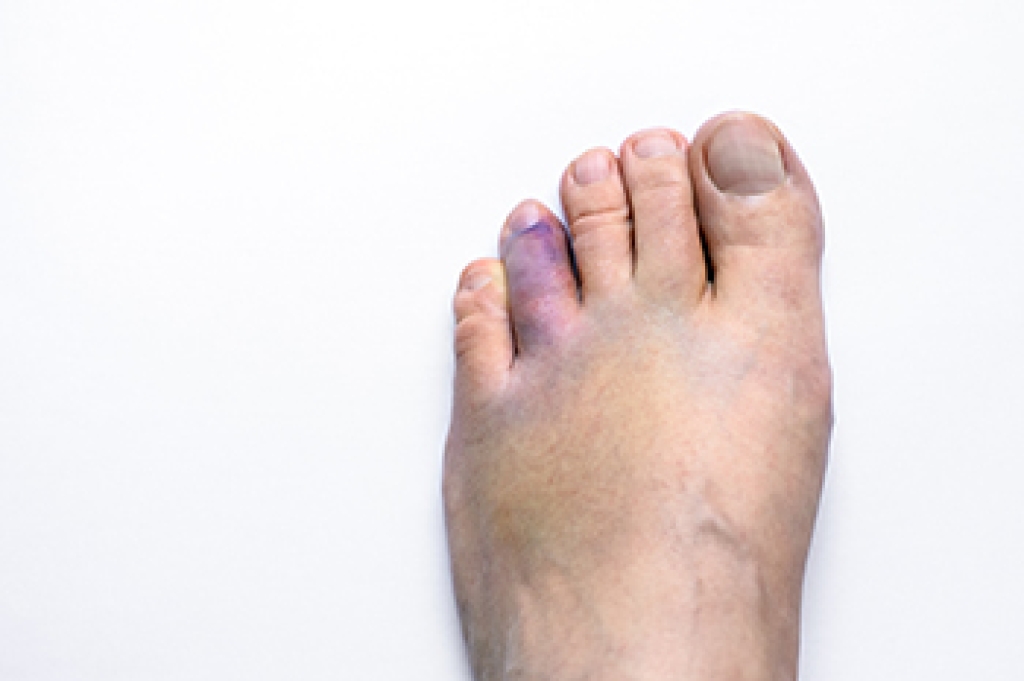
Why Early Broken Toe Diagnosis Matters

A broken toe can make simple movements painful, especially while standing or walking. The injury happens when one of the small bones in a toe cracks or breaks. A hard impact, like stubbing a toe against furniture, can cause a sudden fracture. Dropping a heavy object on the foot can also break a toe. Symptoms include sharp pain, swelling, and bruising. The toe might look crooked or become tender to the touch. Some people hear a cracking sound when the injury occurs. Pain can ease after several hours, but that does not mean the bone is unharmed. Even if you can walk, your toe could still be broken.

Not every foot fracture results from a single accident. Stress fractures are tiny cracks caused by repeated pressure on a bone. They can develop when someone increases running activity too quickly. Changes in foot structure or weakened bones can also raise the risk. Stress fractures can cause pain that returns when standing or moving. Swelling might appear without bruising. A break in one of the longer bones behind the toes can create similar discomfort. Without proper treatment, a fracture can heal in the wrong position. This can lead to lasting pain, difficulty fitting shoes, or arthritis near the injured joint. Getting an accurate diagnosis helps prevent these problems.

A podiatrist can examine the injured toe, check its position, and determine whether an X-ray is appropriate. Treatment depends on the location and severity of the break. A podiatrist can use a splint to keep the toe stable while the bone heals. For some fractures, a stiff-soled shoe or protective walking boot helps limit unwanted movement. Taping the injured toe to a neighboring toe is suitable in certain cases, but it can cause problems in others. Your podiatrist can monitor healing and explain when normal activities can safely resume. If you have broken your toe, it is suggested that you schedule an appointment with a podiatrist for effective treatment solutions.

Broken toes may cause a lot of pain and should be treated as soon as possible. If you have any concerns about your feet, contact Dr. Howard Horowitz from Bowie Foot & Ankle . Our doctor will treat your foot and ankle needs.

What Is a Broken Toe?

A broken toe occurs when one or more of the toe bones of the foot are broken after an injury. Injuries such as stubbing your toe or dropping a heavy object on it may cause a toe fracture.

Symptoms of a Broken Toe

  • Swelling
  • Pain (with/without wearing shoes)
  • Stiffness
  • Nail Injury

Although the injured toe should be monitored daily, it is especially important to have a podiatrist look at your toe if you have severe symptoms. Some of these symptoms include worsening or new pain that is not relieved with medication, sores, redness, or open wounds near the toe.

If you have any questions please feel free to contact our office located in Bowie, MD . We offer the newest diagnostic tools and technology to treat your foot and ankle needs.

Read more about What to Know About a Broken Toe

Exercises That May Help Ease Arthritis

Arthritis in the feet and ankles can make movement painful, stiff, and tiring. However, carefully chosen exercises can help joints move more freely and support the muscles around them. Gentle range-of-motion exercises are a useful starting point. While seated, a patient can slowly point the toes forward, pull them back, and move each ankle in circles. These movements should remain controlled and within a comfortable range. Sharp pain is a reason to stop and seek guidance from a podiatrist before continuing.

Stretching can reduce tightness around joints affected by arthritis. One option is to loop a towel around the ball of the foot while sitting with the knee straight. Gently pulling the towel toward the body stretches the calf and tissues beneath the foot. A wall stretch can also loosen the calf. Strengthening exercises help the feet and ankles handle demands. Seated toe spreads, towel scrunches, and standing heel raises are examples. A stable counter or chair can provide support during heel raises. Patients should begin with a manageable number of repetitions and increase gradually. Exercise should not leave the joint more painful or swollen afterward.

Balance training is valuable because arthritis can change the way a person stands and walks. Holding a counter while standing on one foot can improve control and ankle stability. Low-impact activities like swimming, cycling, and walking can support joint movement without heavy pounding. The right plan depends on the joints involved, the level of pain, and a patient's health. A podiatrist can examine foot position, check joint movement, and identify areas under excess pressure. Care includes guidance on safe exercises, supportive shoes, or custom orthotics to improve how weight moves across the feet. A podiatrist can also adjust the plan when swelling or stiffness makes an exercise difficult. If you have symptoms of arthritis in the feet or ankles, it is suggested that you schedule an appointment with a podiatrist for a diagnosis and an effective exercise routine.

Arthritis can be a difficult condition to live with. If you are seeking treatment, contact Dr. Howard Horowitz from Bowie Foot & Ankle . Our doctor can provide the care you need to keep you pain-free and on your feet.

Arthritic Foot Care  

Arthritis is a term that is commonly used to describe joint pain.  The condition itself can occur to anyone of any age, race, or gender, and there are over 100 types of it.  Nevertheless, arthritis is more commonly found in women compared to men, and it is also more prevalent in those who are overweight. The causes of arthritis vary depending on which type of arthritis you have. Osteoarthritis for example, is often caused by injury, while rheumatoid arthritis is caused by a misdirected immune system.

Symptoms

  • Swelling
  • Pain
  • Stiffness
  • Decreased Range of Motion

Arthritic symptoms range in severity, and they may come and go. Some symptoms stay the same for several years but could potentially get worse with time. Severe cases of arthritis can prevent its sufferers from performing daily activities and make walking difficult.

Risk Factors

  • Occupation – Occupations requiring repetitive knee movements have been linked to osteoarthritis
  • Obesity – Excess weight can contribute to osteoarthritis development
  • Infection – Microbial agents can infect the joints and trigger arthritis
  • Joint Injuries – Damage to joints may lead to osteoarthritis
  • Age – Risk increases with age
  • Gender –Most types are more common in women
  • Genetics – Arthritis can be hereditary

If you suspect your arthritis is affecting your feet, it is crucial that you see a podiatrist immediately. Your doctor will be able to address your specific case and help you decide which treatment method is best for you.

If you have any questions please feel free to contact our office located in Bowie, MD . We offer the newest diagnostic tools and technology to treat your foot and ankle needs.

Read more about How to Care for Your Arthritic Foot

Connect With Us